Warm Air, Blunted Edge: A Data-Led Guide to AMG Heat Management in the UK
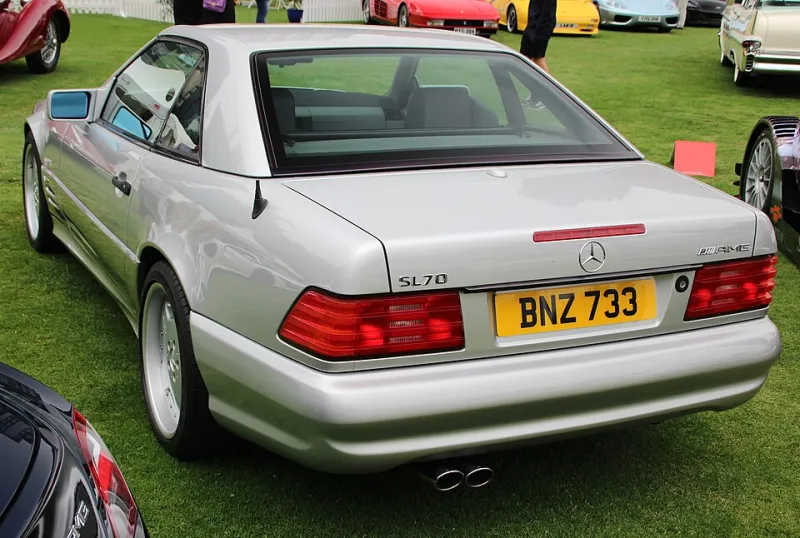
Photo: MrWalkr, CC BY-SA 4.0, via Wikimedia Commons
There is a particular disappointment that arrives with the first proper warm spell of the year. You leave work, the ambient gauge reads 27C, the M25 is doing its stop-start thing, and your AMG feels like it has lost half a litre of displacement. The throttle still works, the noise is still there, but the edge has gone. That is not imagination. It is the ECU protecting the engine from hot air, hot coolant and the knock that follows.
Warm air is a double problem
On a turbocharged car, hot intake air is less dense, so there is simply less oxygen in each cylinder charge. A rough rule of thumb is that air density falls by around 3 percent for every 10C rise in intake temperature, though the real power loss depends on compressor efficiency, intercooler performance and how aggressive the map is. The second problem is knock. Hotter charge air raises combustion temperatures, the knock sensors hear the warning signs and the ECU pulls ignition timing or boost. You feel that as a softer mid-range and a car that revs out without the usual shove.
On a naturally aspirated AMG, such as an M156 C63, the effect is smaller but still real. The engine is pulling hot air from a hot bay, the coolant temperature is climbing in traffic, and the ECU will protect itself. The British summer is not Arizona hot, but our roads are good at creating the conditions that cause heat soak: slow traffic, short bursts of throttle, low airflow through the radiators and repeated track sessions at circuits like Cadwell Park or Bedford Autodrome where average speed is not high enough to clear the heat.
The British summer trap
A 22C day is enough to expose a tired cooling system. Add a black bonnet, a hot engine bay, the air-conditioning condenser working hard and a radiator that has quietly collected a decade of leaves and road salt, and the car is already on the back foot before you ask for full throttle. Owners often blame the intercooler first, but the radiator and charge-cooler circuit deserve just as much attention.
Fuel matters too. If the car is mapped for 99 RON, running 95 RON in hot weather gives the ECU even more reason to retard timing. That is not a reason to carry octane booster everywhere, but it is a reason to be honest about what fuel the map expects. E10 is fine for most modern Mercedes, but a performance map should be built around the fuel you actually use.
What to log before buying parts
A basic OBD datalogger and a phone app will tell you more than a forum thread ever will. Log intake air temperature, coolant temperature, oil temperature where available, boost target versus actual, ignition timing, knock retard, fuel trims and vehicle speed. Do three tests: a steady 60 mph cruise, a third-gear pull from low revs, and ten minutes of idling after a hot run. Repeat them in the morning and again in the afternoon heat.
What you are looking for is not one scary number but a pattern. If intake temperatures climb past 55-60C in traffic and stay there for minutes after you get moving, the charge-cooling system is struggling. If coolant temperature sits at 105C and the fan is roaring, the engine cooling system is the issue. If timing is being pulled only on the third pull, heat is building across the run. A datalogger also shows you whether the problem is real or just a hot day and a sensitive butt dyno.
Folklore versus the fix
Cold-air intake kits are the classic first purchase, and on many modern Mercedes they are a downgrade. The standard airbox is often already drawing from outside the bay, while an open cone filter sits next to the exhaust manifold and heat-soaks in traffic. Bonnet vents can help on track, but they let water into the bay and look odd on a daily. Water-methanol injection works, but it is another system to fill, insure and explain. Heat wrapping the intake pipe helps radiant heat slightly, but it will not fix an undersized heat exchanger.
The worthwhile fixes are duller. Clean the radiator and condenser. Check the charge-cooler coolant pump is actually running. Bleed the system properly. Replace tired coolant. Make sure the front bumper ducting is complete and not missing after a cheap respray. On supercharged AMGs, the intercooler pump and heat exchanger are common weak points. On hot-vee turbo cars, the cooling pack is densely packed, so airflow and clean fins matter. A larger heat exchanger or radiator can help, but only if the rest of the system is healthy and the ducting feeds it properly.
A sensible UK upgrade order
Start with a service and a proper inspection. Then sort the coolant and charge-cooler circuit. Next, clean and seal the ducting. Only after that should you consider a larger heat exchanger or radiator. A remap should come last, because more power makes more heat and you want the cooling to be able to cope. A £100 datalogger is cheaper than a £600 heat exchanger you did not need.
On track, use a cool-down lap and let the car idle for a minute before shutdown after a hard session. Check tyre pressures and coolant levels between sessions. Park with the bonnet up if the paddock allows it. None of this is glamorous, but repeatable pace comes from preparation, not from a magic bottle of additive.
The verdict
Heat soak is real, and the British summer is more than capable of triggering it. But it is not solved by one bolt-on part. Log the car, fix the basics, improve airflow and only then spend on hardware. A well-maintained standard cooling system with clean radiators and correct coolant will often beat a car covered in internet folklore.