The Rubber You Forgot: How Tired Mercedes Mounts Dilute a Good Remap
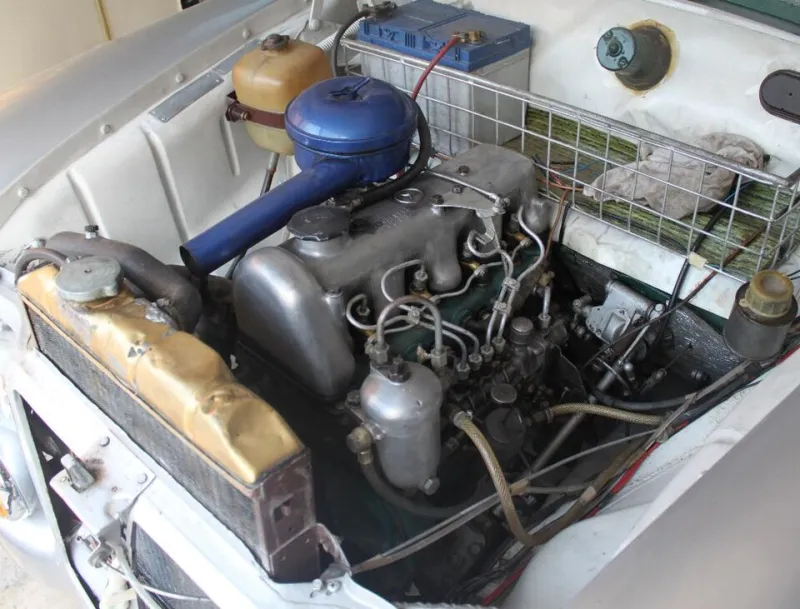
Photo: Gonzosft, CC BY 3.0 de, via Wikimedia Commons
You pick the car up from the remap, head for the nearest decent A-road, and for the first few miles it feels exactly as promised: sharper, stronger, keener to pull. Then you hit a speed cushion, ease off, get back on the throttle, and the car shunts. There’s a thump from somewhere underneath. The driveline feels loose, like the engine and gearbox are having a small argument before deciding to move the car forward. It’s tempting to blame the map. Usually, it’s the rubber.
Mounts are the unglamorous bits that hold the drivetrain in place. Engine mounts, the gearbox mount, differential bushes, subframe bushes on some models — they all do the same basic job: isolate noise and vibration while stopping heavy metal from moving around under load. When they’re new, they do it quietly. When they’re 12, 15 or 20 years old, they sag, crack and leak. On a standard car you might just notice a bit more vibration. On a tuned Mercedes with extra torque, you notice everything.
What worn mounts actually feel like
The classic symptoms are easy to misread. You get a clunk when you come on and off the throttle in traffic. The car rocks more than it should when you blip the throttle at idle. There’s a thump over sharp bumps and speed humps, especially from the front or middle of the car. A tired gearbox mount can make the whole driveline feel like it’s moving through treacle before drive takes up. A worn diff bush can produce a dull knock from the rear when you change direction or get on the power out of a junction.
On a remapped diesel or a torquey V6, these noises arrive earlier because there’s more twist going through the same old rubber. The car isn’t actually slower. It just feels slower because every input is delayed by a secondary movement you didn’t ask for. You press the throttle, the engine moves, the gearbox moves, the prop shaft takes up slack, and then the car responds. That elastic feeling is the enemy of a sharp road car.
Start with a proper look underneath
Before ordering parts, get the car on a ramp or axle stands and have a good look. Engine mounts are often hydraulic on older Mercedes, so check for dark fluid residue, cracked rubber and a mount that has collapsed or sits lower than the other side. A pry bar between the mount and its bracket will show excessive movement, but don’t go wild — you’re checking for slop, not trying to rip it out.
Gearbox mounts are simpler. Look for perished rubber, a mount that has sagged, or evidence that the gearbox is sitting closer to the transmission tunnel than it should. Diff bushes at the rear can be harder to see; look for cracked rubber, shiny witness marks where metal has been moving, and excessive play when you load the driveline by hand. On older cars, also check the engine steady or torque arm if fitted, plus the exhaust hangers and heatshields while you’re there. A rattling heat shield can sound exactly like a knackered mount over UK potholes.
A quick driveway test helps too. With the bonnet open, have someone watch the engine while you hold the car on the brake and load it gently in drive and reverse. You’re looking for the engine lifting or rocking far more than it should. Don’t do this for long, and don’t do it on a cold engine with no oil pressure. It’s a diagnostic aid, not a party trick.
OEM versus polyurethane: pick for the road you actually drive
This is where a lot of UK owners go wrong. Polyurethane bushes and mounts sound like an upgrade, and they can be. They’re firmer, more durable and they tighten up driveline shunt. But they also transmit more noise and vibration into the cabin. On a smooth German autobahn, that might be fine. On the M25, a broken B-road and a thousand speed humps, it can turn a pleasant Mercedes into a buzzing, thumping thing you resent on the school run.
For most tuned road cars, the sensible recipe is genuine or good-quality OEM-spec mounts for the engine and gearbox, and polyurethane only where it solves a specific problem — often the rear diff bushes or a particular weak point on a track-biased car. If you do go poly, choose the softer road-grade compound, not the race stuff. Fit the right parts for the right job. A fast road car still needs to be liveable.
Also be careful with “uprated” mounts sold as a cure-all. A stiffer engine mount can make an existing gearbox mount failure feel worse, because the load has to go somewhere. Refresh the set as a system rather than fitting one hard mount and leaving three tired ones to cope.
A realistic cost plan before more power
Costs vary hugely by model, but here’s a sensible UK budget for an older C-Class, E-Class or SLK-type car. A pair of OEM-spec engine mounts is often £120–£350 in parts. A gearbox mount is usually £40–£150. Rear diff bushes might be £60–£250 depending on whether you buy bushes or a complete mount. Labour is the wild card: engine mounts can be a two-to-four-hour job, gearbox mounts are often quicker, and rear diff bushes can turn into a subframe-down job on corroded cars.
A realistic total for a thorough refresh is £500–£1,200, with the higher end covering a seized bolt, a corroded bracket or a “while we’re in there” exhaust hanger. That’s not pocket change, but it’s often less than another round of mapping and it changes how the car feels every single time you drive it. Do the mounts first. Then decide whether you actually need more power.
The takeaway
A tuned Mercedes should feel tight, not tired. If your car shunts, thumps and slops its way down a British B-road, the map isn’t necessarily the problem. Age, salt, potholes and torque have probably had a go at the rubber. Inspect the mounts properly, replace the worn ones with sensible road-spec parts, and budget for the job before you chase another 30bhp. The sharpest upgrade you can make might be the one that stops the engine moving about.