Noise-Limit Recon: Getting a Performance Mercedes Through a UK Track Day

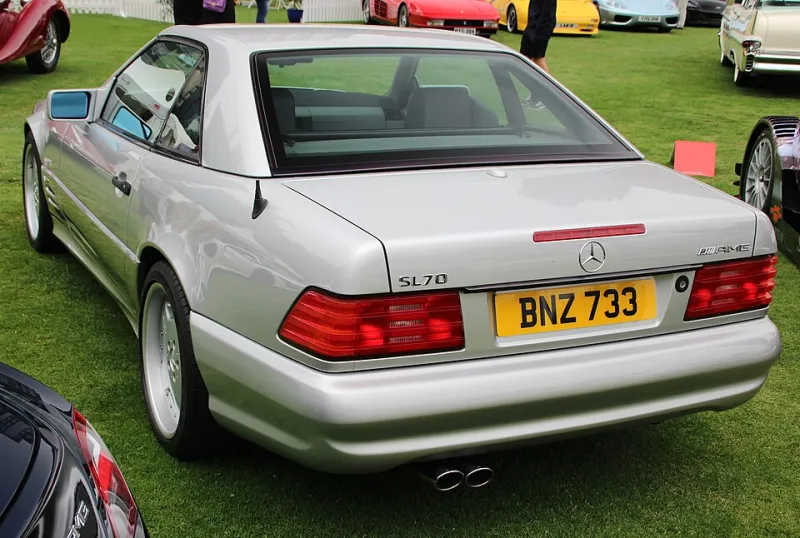
Photo: MrWalkr, CC BY-SA 4.0, via Wikimedia Commons
An MOT pass tells you the car is legal. It does not tell you it will survive a static noise test at 8am, or a trackside meter halfway down the straight. UK circuit noise limits are their own little ecosystem, and a performance Mercedes with a valve exhaust can fall foul of them even when it sounds perfectly sensible on the school run.
The headline is simple: most UK track days operate a static limit and a drive-by limit. The static test is usually done in the paddock at a set distance and angle, with the engine held at a specified rpm. The drive-by meter is trackside, and it catches the car under load. You can pass one and fail the other.
What the venues actually ask for
Limits change, and each venue publishes its own rules, so check the current regulations before you book. As a rough guide, Bedford Autodrome is known for a tight drive-by limit — often quoted around 87.5 dB(A) — which makes it one of the hardest UK circuits for a loud car. Goodwood and Donington Park commonly sit around a 98 dB(A) static limit, with drive-by limits that vary by day and event. Brands Hatch has its own numbers. The point is not to memorise a single figure; it is to know that a 98 dB static pass does not guarantee a quiet drive-by.
A standard AMG in Comfort mode may pass without drama. The same car in Sport+ with the valves open, a decat downpipe and a res delete may not. Turbochargers and modern exhausts can also behave differently under load than they do at a static test. The meter does not care about your intentions.
Valve exhausts: the mode matters
A valve exhaust is a useful thing on a track day, but only if you use it honestly. Some venues require the valve to be in its quiet mode for the test, and some require it to be fixed. If the valve opens automatically above a certain rpm or throttle position, the drive-by meter will hear it even if the static test was quiet.
Do not rely on a remote controller that you can switch mid-lap. That is not a noise solution; it is a way to get black-flagged. Check the venue's rules on valve operation and make sure the car is in the mode you declared. If the valve system is faulty or stuck open, fix it before you book.
Resonators, repacks and removable baffles
The usual fixes are not glamorous. A mid-pipe resonator, a Helmholtz chamber or a quarter-wave side branch can take the edge off a drone without strangling the car on the road. A repacked silencer can bring a tired exhaust back to its original volume. A removable baffle or insert can get you through a static test, but it may not help with drive-by, and it can cost power.
Be careful with cheap baffles. A restrictive insert can raise backpressure and upset the map. If you have a tuned car, ask your tuner before you bolt something into the exhaust. The goal is to lose a few decibels, not to create a new restriction that the ECU has to fight.
The black-flag risk
A noise black flag is not just embarrassing. It can end your session, and repeated breaches can get you removed from the day. Some circuits use a three-strike system; some are less forgiving. You may be asked to change mode, short-shift past the meter or leave. If you have travelled three hours and paid £300, that is a bad day.
Drive-by meters are often placed where cars are under load — on a straight, out of a corner, or on a hill. Short-shifting can help, but it is not a licence to be antisocial. The marshals have heard every trick. The best approach is to arrive with a car that is genuinely under the limit, not one that relies on a delicate throttle dance.
Test before you book
You can do a rough static test at home with a calibrated dB meter, but phone apps are not precise enough to guarantee a pass. Use the same method the venue uses: a set distance, usually 0.5 metres at 45 degrees from the tailpipe, with the engine at the specified rpm. Do it warm, with the valve in the mode you will use. If you are close to the limit, assume you are over it on a cold morning.
Ask the venue if they offer a noise test on arrival. Many do. Book a quiet day if you are unsure. Bedford and Goodwood are not the places to gamble with a loud exhaust. Donington is more generous on static, but the drive-by meter still exists.
The road-manners compromise
A track-quiet Mercedes does not have to be a boring one. A well-designed resonator and a closed valve in town can keep the car civilised, while a proper map and a good diff do the real performance work. The best UK fast road cars are the ones you can drive to the circuit, pass the meter, enjoy the day and drive home without a headache.
So before you book, check the limits, check your valve, check your silencer and check your ego. The 98 dB ceiling is not there to spoil your fun. It is there to keep the day happening for everyone.